
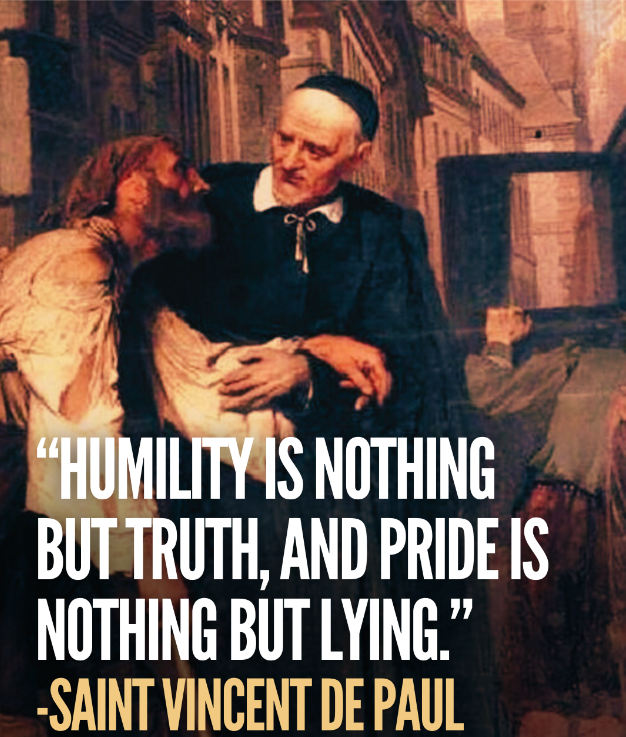
Saint Vincent de Paul’s quote, “Humility is nothing but truth, and pride is nothing but lying,” expresses a profound understanding of human nature and spiritual wisdom. Saint Vincent de Paul emphasizes that humility is rooted in truth because it involves an honest recognition of who we truly are—our strengths, weaknesses, and our relationship to God and others. In the Christian tradition, humility is considered essential for spiritual growth because it:
Fosters honesty: Humility allows one to live honestly with themselves and others. There’s no need for pretense or self-promotion because the humble person is comfortable with the truth of their situation and their inherent dignity as a child of God.
Acknowledges human limitations: Humility means recognizing that we are not all-powerful or all-knowing, and that we need God’s grace and the help of others to live virtuous lives.
Embraces dependence on God: In Christian theology, humility is about understanding that all good comes from God. A humble person acknowledges their dependence on divine grace rather than claiming credit for their virtues and accomplishments.In this way, humility is not self-deprecation or thinking less of oneself; it is seeing oneself accurately, as God sees us—imperfect yet beloved, capable yet finite.
Saint Vincent contrasts humility with pride, which he calls “nothing but lying.” Pride, in this context, is a distortion of the truth because it involves inflating one’s sense of self-worth and denying reality. Prideful individuals often:
- Exaggerate their abilities: Pride leads people to think they are better, more capable, or more important than they truly are. This is a falsehood because it elevates the self above others and even above God.
- Reject vulnerability: Pride involves hiding weaknesses or pretending they don’t exist. Doing so cuts people off from growth and genuine relationships, both with others and with God.
- Dismiss the need for God: In the spiritual sense, pride is often seen as the root of sin because it involves an attitude of self-sufficiency—thinking that we do not need God’s help, grace, or mercy.
In Christian teaching, pride is considered dangerous because it blinds people to the truth of their dependence on God and their need for repentance and humility. Pride, then, becomes a form of spiritual deception.
For Saint Vincent de Paul, humility was not just a spiritual ideal; it was central to his work with the poor. He believed that serving others requires humility, as it involves recognizing the dignity of every person and the shared human condition. Humility brings people closer to the truth that all are equal in God’s eyes, regardless of social status or wealth. Pride, however, reinforces divisions and inequality by feeding into social hierarchies and self-importance.
In Saint Vincent de Paul’s view, humility aligns with truth because it embraces the reality of our dependence on God and our shared humanity, while pride is a form of lying because it involves living in an illusion of superiority, self-sufficiency, and arrogance. This distinction invites people to pursue humility as a path to greater honesty, deeper relationships, and closer communion with God.
Please pray for all those who have died recently:
Thomas Mani (87), George Kakkassery (75) Thomas Chummar (81) P V Varghese Punnackapadavil (88) Marykutty Mathew (76)
Commemorate the Death Anniversaries of Our Loved Ones:
Prof.Baby Varghese Menacherry (61)2001.