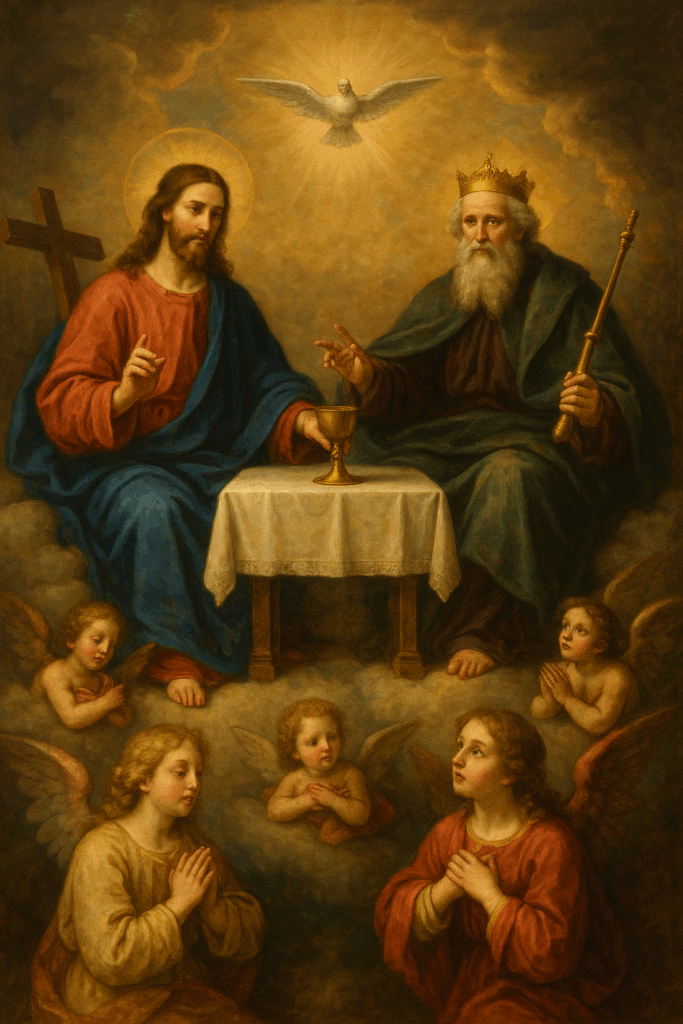
The Church celebrates the Feast of the Holy Trinity on the Sunday following Pentecost each year, immersing the faithful in the supreme mystery at the core of Christian theology—the Trinity. The feast emphasises the paramount Christian teaching that God is one in substance but exists uniquely and eternally as three persons: Father, Son, and Holy Spirit.
Deeply grounded in Holy Scripture and refined through rigorous theological reflection by Church Fathers such as Augustine, Gregory Nazianzen, and Athanasius, the Trinity reveals the relational nature of God’s being. The Father eternally generates the Son, the Son proceeds from the Father, and the Holy Spirit eternally proceeds from their loving relationship. This eternal Trinitarian activity is an intimate communion of perfect love, which serves as a model for human relationships.
The Feast of the Holy Trinity is not abstract or speculative theology. Instead, it leads believers into a living and life-changing experience of God, whose nature is relational communion. It reminds Christians of the challenge to live Trinitarian love in their lives, echoing Christ’s prayer for the unity of His disciples (John 17).
In celebrating the Feast of the Holy Trinity, the Church makes a statement that knowledge of God involves both mystery and revelation. The Church is calling believers to both humble respect for the mystery of God and openness to ongoing revelation, recalling the depth and richness of God’s self-revelation. The feast ultimately calls Christians to lives that are grounded in love, one in purpose, and expressive of the divine communion at the very heart of God Himself.