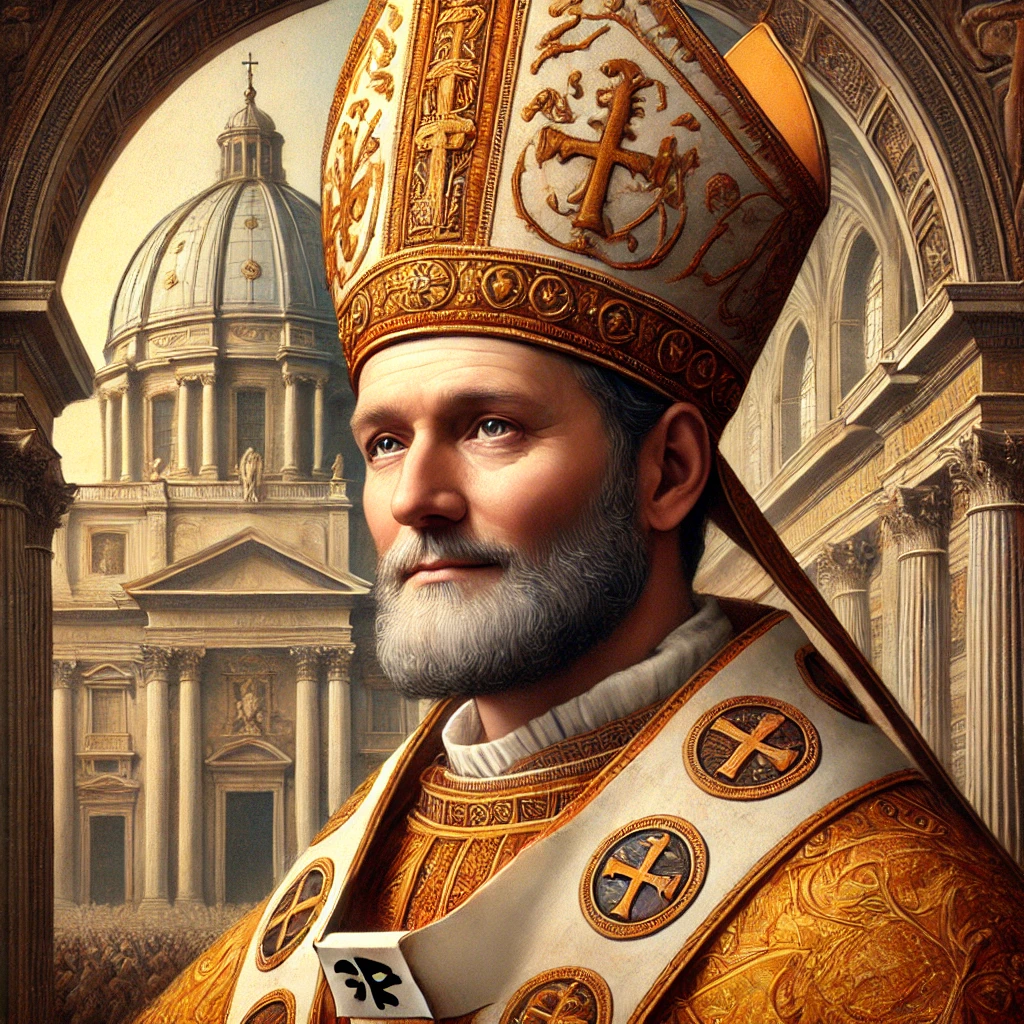
Pope Leo I, commonly known as Pope Leo the Great, served as pope from 440 to 461 AD and was one of the most influential leaders of the early Christian Church. His reign is marked by profound theological contributions, significant political engagement, and steadfast defense of the faith, earning him the title “the Great.” Pope Leo I is also one of only a few popes to be declared a Doctor of the Church, a title that signifies his exceptional contribution to Christian theology and doctrine.
Key Achievements and Theological Contributions
One of Pope Leo’s most significant theological achievements was his defense and clarification of the doctrine of Christ’s dual nature, which states that Jesus Christ is both fully divine and fully human. During his papacy, the Church was embroiled in various theological controversies, especially concerning the nature of Christ. This controversy culminated in the Council of Chalcedon in 451, where Pope Leo’s “Tome” (a letter to Archbishop Flavian of Constantinople) was read aloud. In the Tome, Leo articulately defended the doctrine that Christ possesses two distinct natures—divine and human—united in one person. This teaching became a cornerstone of orthodox Christian doctrine and was adopted by the Council of Chalcedon, which declared, “Peter has spoken through Leo,” underscoring the authority and influence Leo held within the Church.
Organizational and Liturgical Reforms
Pope Leo was a significant reformer of Church structure and liturgy. Recognizing the need for a strong central authority, he reinforced the power and jurisdiction of the papacy, setting a precedent for later popes. His belief in the primacy of the Bishop of Rome became a foundational argument for the Pope’s supreme authority over the Church, especially in theological disputes. Leo also emphasized the importance of the sacraments and established standardized liturgical practices that contributed to the development of what would eventually become the Roman Rite. Some prayers he composed are still used in the Church’s liturgy today, underscoring the lasting influence of his reforms.
Legacy and Canonization
Pope Leo the Great died on November 10, 461 AD, after 21 years as pope. His legacy endures not only through his theological contributions and liturgical reforms but also as a symbol of courage, intellect, and faith during a turbulent period for the Church and the Western world. Recognized for his holiness and the strength of his teachings, he was canonized as a saint, and in 1754, he was declared a Doctor of the Church by Pope Benedict XIV. His feast day is celebrated on November 10, honoring his life and legacy.
Conclusion
Pope Leo the Great’s papacy exemplifies the power of faith and intellect in the face of political, social, and doctrinal challenges. His theological clarity, diplomatic achievements, and commitment to the Church laid foundational stones for the papacy’s evolving role in medieval Europe. Today, Pope Leo remains a revered figure, remembered as a shepherd who guided his flock through adversity and a theologian whose insights continue to resonate within Christian teachings.
Please pray for all those who have died recently:
Thomas Mani (87), George Kakkassery (75) Thomas Chummar (81) P V Varghese Punnackapadavil (88) Marykutty Mathew (76)
Commemorate the Death Anniversaries of Our Loved Ones:
Prof.Baby Varghese Menacherry (61)2001.