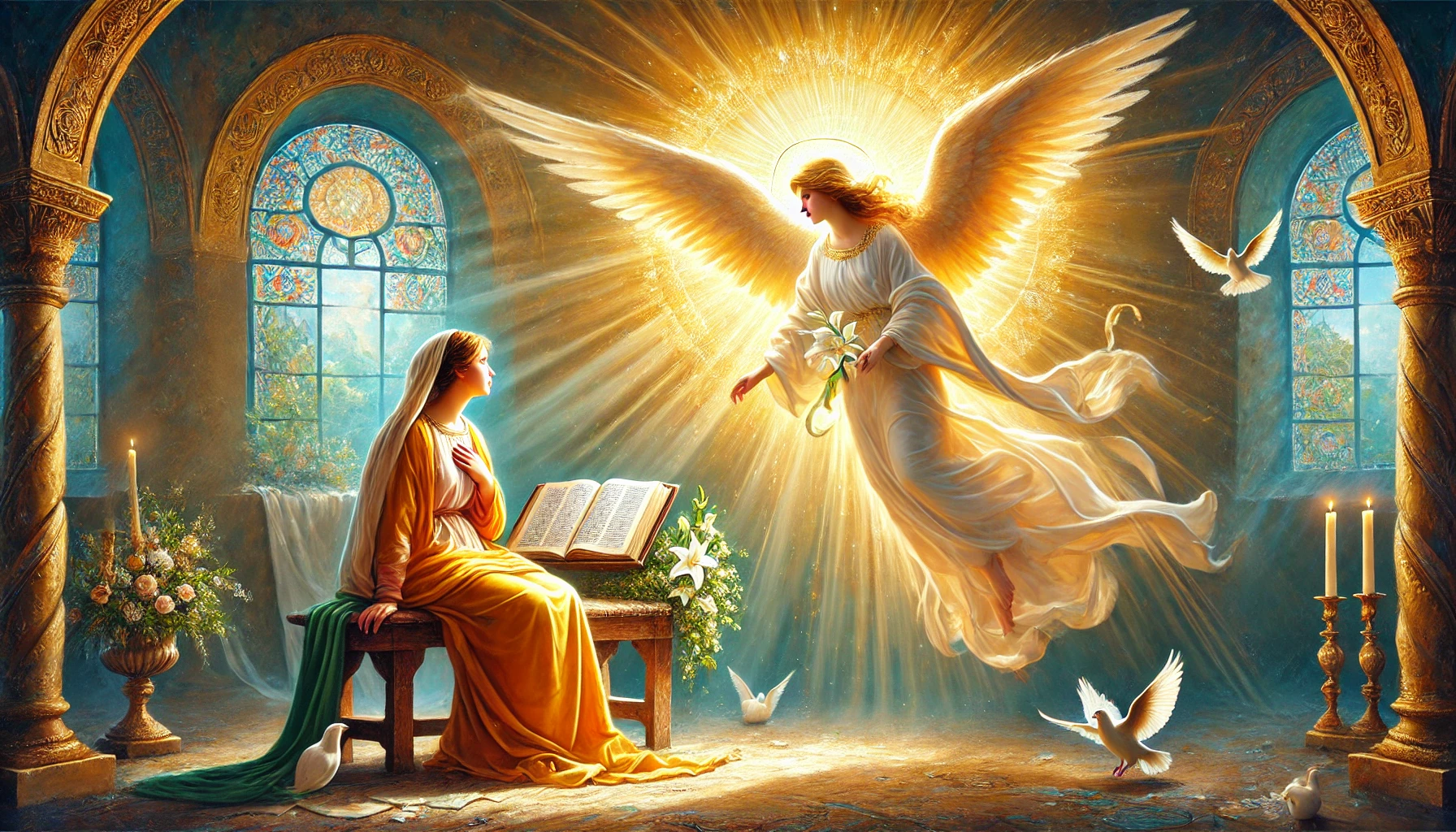
The story of the Annunciation, found in Luke 1:26-38, is one of the most profound and inspiring narratives in the Christian faith. It recounts the moment the angel Gabriel appeared to Mary, a humble young woman from Nazareth, to deliver an extraordinary message: she was chosen by God to be the mother of His Son, Jesus Christ. This encounter is not just a cornerstone of the Christmas story but also a powerful reminder of God’s grace, sovereignty, and the role humanity plays in His divine plan. It speaks to us today, inviting reflection on how faith, obedience, and trust in God can transform our lives.
God’s Sovereignty in Unexpected Places
The Annunciation begins with Gabriel being sent to Nazareth, a small, insignificant town in Galilee. It is striking that God chose such an unassuming place and a young woman with no worldly status for such a monumental task. This reminds us that God often works through the ordinary and unexpected. He doesn’t require grandeur or fame to accomplish His purposes—He chooses the humble and the willing. For us, this is a powerful message: no matter how insignificant we may feel, we are never too small for God’s plans. He sees potential in each of us, often in ways we cannot yet understand.
The Fulfilment of Ancient Promises
Mary’s engagement to Joseph, a descendant of King David, situates this story within the larger framework of biblical prophecy. Through this lineage, Jesus fulfils God’s covenant with David, ensuring an eternal throne (2 Samuel 7:12-16). This continuity between the Old and New Testaments reminds us of God’s faithfulness. His promises are not fleeting; they endure through time and are fulfilled in His perfect timing. When life feels uncertain or chaotic, this truth is a source of comfort. God’s plans are always in motion, even when we cannot see the full picture.
The Virgin Birth: A Miracle of Faith
Gabriel’s message to Mary contains a staggering revelation: she, a virgin, will conceive and give birth to a son named Jesus. This miraculous event is made possible by the Holy Spirit’s overshadowing of Mary, symbolizing God’s creative and sanctifying power. The virgin birth underscores Jesus’ dual nature—fully divine and fully human—making Him uniquely qualified to bridge the gap between God and humanity.
Mary’s response to this revelation is both relatable and inspiring. She asks, “How can this be, since I have not had sexual relations with a man?” (Luke 1:34). This question isn’t born of doubt but of curiosity and a desire to understand God’s plan. Her willingness to ask questions reminds us that faith doesn’t mean having all the answers. It means trusting God even when the path ahead is unclear.
The Mission of Jesus: Savior and King
Gabriel’s words also reveal the identity and mission of Jesus. He will be called the Son of the Most High, inherit the throne of David, and His kingdom will have no end. This eternal reign fulfils messianic prophecies and establishes Jesus as both Savior and King. The name “Jesus,” meaning “The Lord saves,” encapsulates His mission to redeem humanity. For Christians, this is the heart of the gospel: God’s immense love for the world manifested in Jesus, who came to save us from sin and reconcile us to Himself.
Mary’s Faith: A Model for Us All
Perhaps the most remarkable aspect of the Annunciation is Mary’s response. Despite the risks and uncertainties—an unwed pregnancy could lead to social ostracism or worse—Mary declares, “I am the Lord’s servant. May it happen to me as you have said” (Luke 1:38). Her humble acceptance of God’s will is a powerful example of faith, obedience, and courage.
Mary’s response challenges us to reflect on our own faith. How often do we hesitate or resist when faced with difficult or unexpected calls from God? Her story encourages us to trust in His plan, even when it requires stepping into the unknown. In saying “yes” to God, Mary changed her life and became a vital part of His redemptive work in the world.
God’s Grace: The Foundation of Our Faith
A recurring theme in the Annunciation is grace. Gabriel addresses Mary as “favoured one,” emphasizing that her role is a gift of God’s grace, not something she earned. This reflects a broader truth: salvation and participation in God’s work are rooted in grace, not human effort. It’s a reminder that God’s love and favour are freely given, and His presence empowers us to fulfil the tasks He sets before us.
A Timeless Invitation
The Annunciation is more than a historical or theological event—it’s a timeless invitation to trust in God’s plan and embrace His grace. Like Mary, we are called to participate in His work, to say “yes” even when we feel inadequate or uncertain. Her story reminds us that God’s power is made perfect in our weakness (2 Corinthians 12:9) and that with Him, “nothing will be impossible” (Luke 1:37).
Conclusion: A Message for Today
As we reflect on the Annunciation, let us be inspired by Mary’s faith and courage. Her story teaches us that God’s plans often exceed our understanding but are always rooted in His love and faithfulness. In our own lives, may we find the strength to say “yes” to God’s calling, trusting that He will equip us for whatever lies ahead.
The Annunciation is ultimately a celebration of hope, grace, and the transformative power of faith. It marks the beginning of the Incarnation—the moment God took on human form to redeem the world. For Christians, it’s a reminder that no matter our circumstances, God is with us, inviting us to trust in Him and participate in His extraordinary plan for humanity.
Dr. Dany Varghese is a faculty member at the School of Computer Science at the University of Surrey, specializing in machine learning, data science, and explainable AI. A dedicated educator and researcher, Dr. Varghese has published in leading conferences and journals and previously served as an Assistant Professor at a leading engineering college in India. For more, visit dvarghese.com.