The Syro-Malabar Church, one of the 23 Eastern Catholic Churches in full communion with Rome, follows the East Syriac liturgical tradition. Deeply rooted in the apostolic heritage of St. Thomas the Apostle, the Church retains many ancient rites and ceremonies, one of the most significant being the Blessing of the Myron, also known as Holy Chrism.
What is Myron?
Myron (from the Greek word for “myrrh”) is the sacred oil used in several sacraments and blessings within the Church, particularly in Chrismation (Confirmation), the consecration of churches and altars, and the anointing of sacred vessels and religious articles. The preparation and blessing of the Myron is a solemn act signifying the descent of the Holy Spirit, echoing the sacramental life of the Church.
Scriptural and Patristic Roots
The tradition of sacred anointing with oil originates in the Old Testament, where kings, prophets, and priests were anointed as a sign of being chosen by God. In the New Testament, Jesus Christ is called the “Anointed One” (Messiah or Christos), and the Church continues this tradition through sacramental anointing.
Church Fathers such as St. Ephrem and St. Aphrahat allude to the symbolism and sanctity of the Myron. It is seen as an extension of Pentecost—an invocation and reception of the Holy Spirit through tangible means.
The Ritual in the Syro-Malabar Church
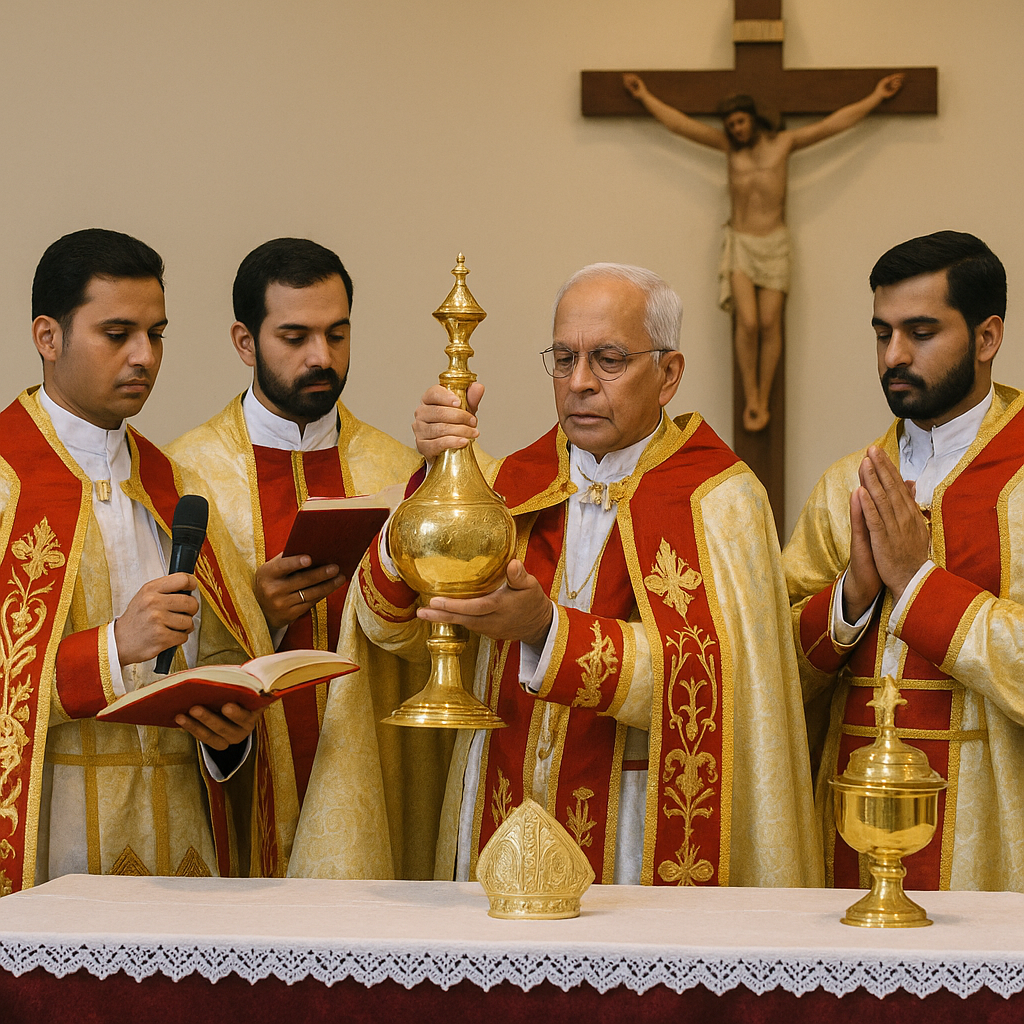
In the Syro-Malabar Church, the Blessing of the Myron is performed by the Major Archbishop (Catholicos) or a bishop specially appointed for the occasion. The ceremony is rich in symbolism and takes place rarely, only once every few years, due to the sacredness and the large quantity of oil prepared for long-term ecclesial use.
Preparation
The process begins with mixing pure olive oil with various aromatic substances, including balsam, myrrh, and other perfumes. This mixture reflects the sweetness of divine grace and the variety of charisms the Holy Spirit bestows.
The Blessing Ceremony
The blessing occurs during a solemn liturgy, often on Holy Thursday or during special synodal gatherings. The rite includes:
- Prayers of invocation to the Holy Spirit
- Readings from Scripture emphasising anointing and mission
- The epiklesis (calling down of the Holy Spirit) over the oil
- A procession with the Myron, symbolising its sanctity and distribution
The atmosphere is one of awe and reverence, underscoring the Church’s ecclesial unity and apostolic continuity.
Distribution and Use
After the blessing, the Myron is poured into smaller containers and distributed to the various eparchies (dioceses) of the Syro-Malabar Church, both in India and abroad. It is preserved in sacred vessels called chrismatories and is used primarily by bishops and priests during sacramental celebrations.
Significance
The Blessing of the Myron is not just a ritual but a profound theological statement. It emphasizes:
- The presence and work of the Holy Spirit in the Church
- The apostolic and sacramental unity of the Church
- The continuity of ancient Christian practices
- The Church’s mission to sanctify the faithful through the visible signs of grace
Conclusion
In the Syro-Malabar Church, the Blessing of the Myron remains a deeply cherished tradition, affirming the sacramental life of the faithful and the apostolic roots of the Church. It is a moment when heaven touches earth—when oil, mixed and blessed, becomes a channel of divine grace and a symbol of the Spirit who anoints, empowers, and sends forth.
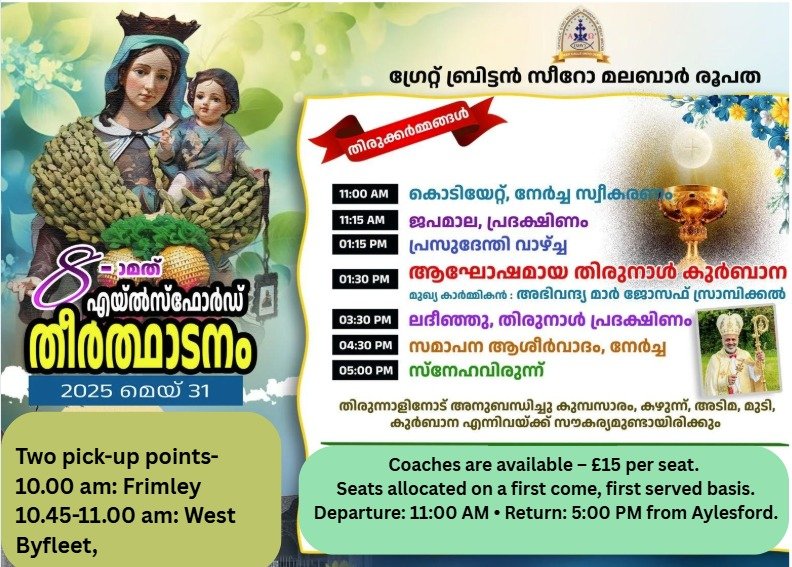
Upcoming events: